No One Quite Knew How to Localize Drew Carey in The Sims
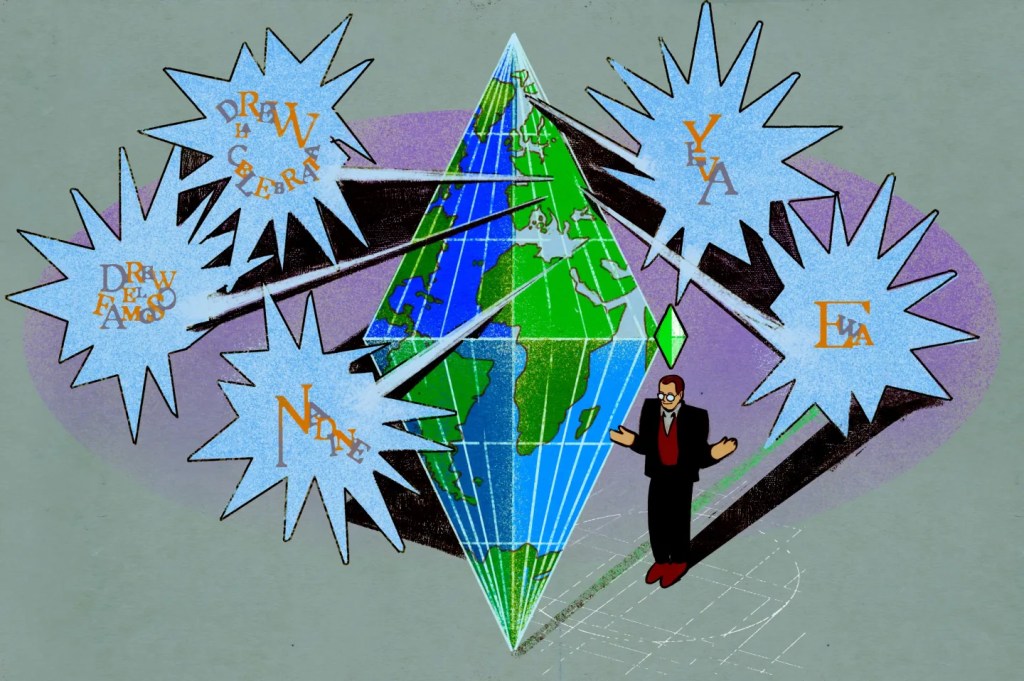
Localization is a critical aspect of video game development, ensuring that games resonate with players from different regions and cultures. While the process often focuses on language translation and cultural adaptation, there are some instances where the challenge goes far beyond simply swapping out words or symbols. One of the most unusual and humorous examples of this challenge occurred during the localization of The Sims, particularly when it came to adapting Drew Carey for international audiences.
For those who might not be familiar, Drew Carey is an American comedian and television host best known for his roles in The Drew Carey Show and hosting The Price is Right. When The Sims first launched in 2000, players could invite famous personalities into their in-game households, including Carey. However, when it came to international versions of the game, developers faced an interesting dilemma: how to make Drew Carey recognizable and meaningful to audiences who might not be familiar with him. What followed was an often humorous attempt at translating celebrity culture into a global context—a challenge that still resonates today in the world of video games, especially with the increasing prevalence of cultural nuances in digital entertainment.
The Internationalization Challenge of Drew Carey
When The Sims first launched, it quickly became a cultural phenomenon. Players could create and control virtual lives, including incorporating real-world celebrities into the game. Drew Carey, being a well-known figure in American pop culture, was included as one of these celebrity Sims. But The Sims was a game for a global audience, and not every player outside of the U.S. would recognize Carey, nor would they necessarily understand his comedic persona or the cultural context of his fame.
This presented a unique problem for the localization teams working on international versions of the game. How do you adapt a specific American celebrity for players in regions where Drew Carey’s name and image may not carry the same weight or recognition? The issue wasn’t just a matter of translating the English dialogue but involved reshaping an element of American culture that might be completely foreign to non-American players. As it turns out, the solution was far more complicated—and often amusing—than just changing the name or replacing him with a more recognizable figure.
The Struggle to Adapt American Celebrities
The dilemma of adapting Drew Carey for international audiences was just one example of a larger trend in localization: the struggle to adapt Western pop culture references for global markets. This was particularly challenging in the early days of gaming, when cultural boundaries were more rigid, and players in regions like Europe, Japan, and Australia often had very little exposure to the pop culture icons of the U.S.
In The Sims, the issue of celebrity recognition was especially problematic because the game featured a series of in-jokes and references that might only make sense to players familiar with American television, movies, or celebrities. While some American figures like film stars or musicians could be easily adapted or substituted with equally famous figures in other countries, others—like Drew Carey—were much more difficult to contextualize.
In the case of Drew Carey, many international versions of The Sims were faced with the decision of whether to keep him in the game or replace him entirely. Some localization teams opted to substitute Carey with other celebrities who were more familiar to the target audience, such as well-known actors or comedians from the respective regions. Other times, the challenge was sidestepped by simply using a generic celebrity persona, leaving players to interpret the character however they saw fit.
A Cultural Bridge: From Drew Carey to Local Celebrities
In some cases, Drew Carey’s character in The Sims was translated in ways that didn’t directly reference him at all. For example, in the European version of the game, Carey’s image was replaced with a more generic “celebrity” figure—someone who could serve as a stand-in for the concept of an American celebrity, without explicitly trying to replicate his comedic style or career. In other versions, The Sims developers leaned into their local celebrity culture, replacing Drew Carey with figures who were more universally recognized in their respective markets.
This localization strategy was not limited to just The Sims. It was part of a larger effort to make video games feel more personal and culturally relevant to players around the world. While American pop culture icons were often used as placeholders in the early days of gaming, localization teams quickly realized that culturally specific references could alienate international players rather than resonate with them.
Instead, local teams began to favor using familiar, regional celebrities who players would immediately recognize. This allowed the game to maintain its cultural relevance and connection to local entertainment traditions. In the case of The Sims, this meant that Drew Carey was often swapped for other TV personalities or comedic actors who could fill the same role, ensuring that the game still felt “local” to audiences worldwide.
The Global Evolution of Celebrity Culture in Gaming
As gaming continues to evolve and become more international, the need for localization—especially with regards to pop culture references—remains a central challenge. Games today are often released simultaneously across multiple countries and regions, making it even more crucial for developers to consider cultural differences and nuances from the outset of the development process. This is particularly true for games like The Sims, which rely heavily on player engagement and social simulation. Ensuring that in-game celebrities or cultural references resonate with players is critical for success.
One contemporary example of how gaming has navigated these challenges can be found in the online pokies Australia scene. Online pokies, a popular genre of digital gambling, has made the transition from traditional physical slots to a digital format that is often tailored for specific regional audiences. Just as with The Sims, online pokies must adapt their themes, imagery, and even celebrity endorsements to ensure that players feel a sense of connection to the experience. In Australia, for example, online pokies may incorporate Australian celebrities or themes that reflect the local culture, much like how video game developers today carefully choose culturally relevant figures to include in their titles.
The Future of Localization in the Global Gaming Market
The issue of localizing celebrities or cultural references in video games like The Sims highlights a growing understanding within the gaming industry: players want to feel seen, heard, and understood. This means that developers must take the time to understand not just the language of their international audiences, but also the broader cultural landscape. Just as local pokies operators must cater to Australian preferences to succeed in the region, game developers must find ways to ensure that their titles resonate on a deeper, more personal level.
In the case of The Sims, the adaptation of Drew Carey is a funny yet poignant example of the difficulties and creativity that localization teams face in an increasingly globalized world. While players may have missed out on the specific humor of Drew Carey in The Sims, the efforts made to introduce local flavors and personalities into the game ultimately helped make the experience more accessible to a wider audience.
In the end, the Drew Carey dilemma serves as a microcosm of a much broader trend in the gaming industry: the delicate balance between global ambition and local identity. As the world of video games continues to expand, the art of localization will only become more important—and as The Sims proved, getting it right can make all the difference in the world.
 Site Title